JournalismNews
Ed Kashi's Visit to W&L
Ed Kashi's February 4, 2025, presentation in Stackhouse Theater on Washington and Lee's Campus
By Shane Riley
3 min read
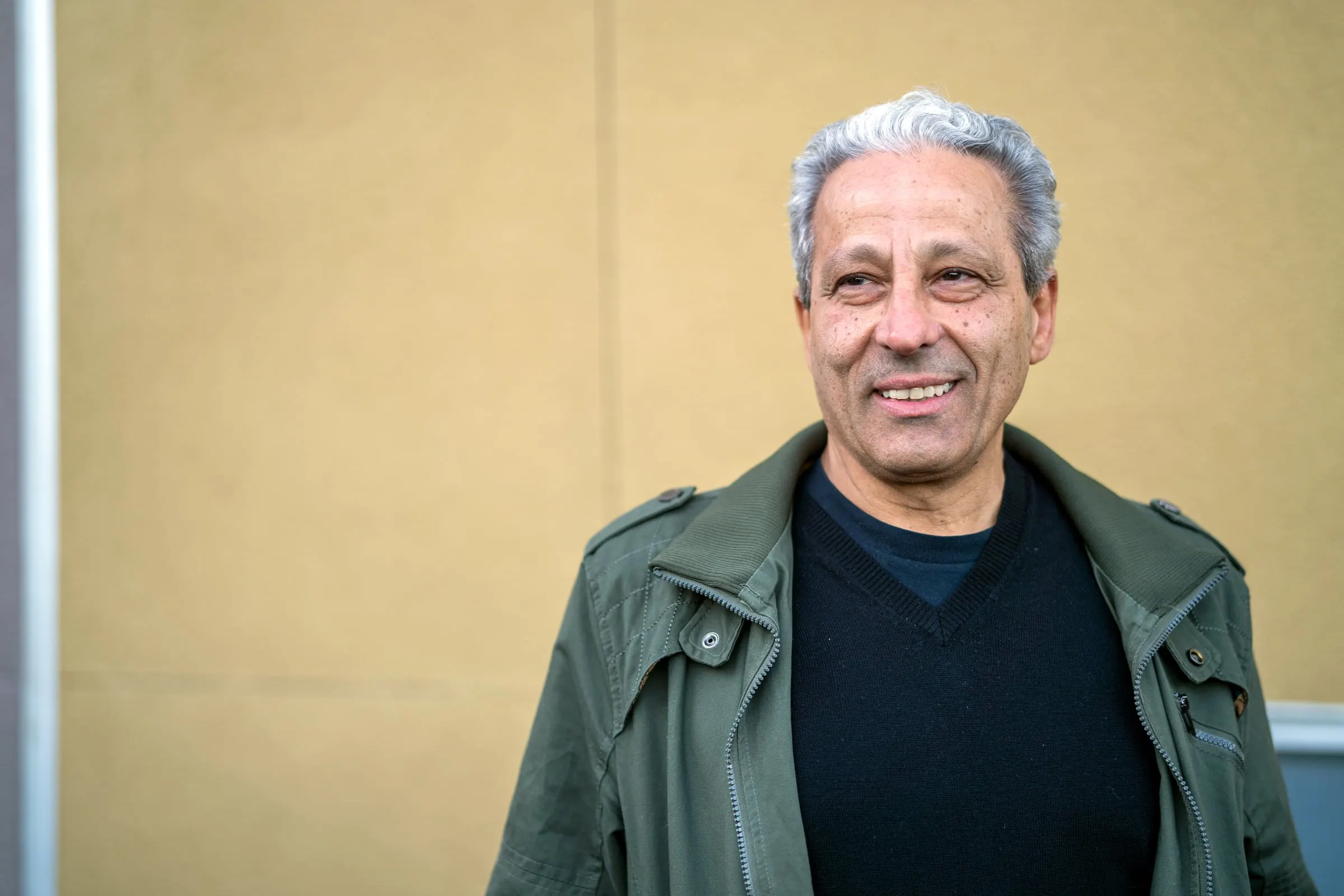
Ed Kashi’s experience as a photojournalist and documentarian has exposed him to the harsh conditions vulnerable communities across the globe must endure. Documenting these difficult conditions and the effects on people’s lives has led to self-reflection for Kashi on the necessity of his camera work.
“Sometimes in this work, you think like the last thing these people need is another guy with a camera,” Kashi said. “But then the whole point of my work and the work like this that my colleagues do is to raise awareness, because you don’t want these stories to die.”
Kashi discussed the vitality of humility and compassion when working in struggling communities, like with refugees in Syria, to effectively engage with those people.
“Do your research to understand, you know, whose life I am documenting,” Kashi said. “Empathy is such an important tool. Also, curiosity, to want to earnestly listen and try to understand. And most importantly, in my work is to observe.”
Kashi has worked for National Geographic, The Guardian, and The New Yorker, among other organizations, on a plethora of projects in many countries. He specializes in documenting vulnerable communities over the course of weeks to years, capturing the dynamics of their daily lives. On Tuesday night, he detailed and shared photos from his 40-year career to an audience of about 50 Washington and Lee University students and faculty.
Kashi’s first personal project was documenting life in Northern Ireland Protestant communities in the late 1980s. He spent the bulk of his time surrounded by younger working-class boys. Kashi was exposed to intense violence and conflict, but simultaneously to a strong culture and community.
“One of the many things this project taught me early in my life and my career was the richness, if you like, of delving into a community and coming to learn in a way of becoming a mini-expert about a group of people,” said Kashi. “It’s one of the driving forces and one of the inspirations for me to go out in the world and do this work. I genuinely want to learn about the world and about people.”
He has carried that curiosity and empathy to projects domestically as well. In the 1990s, Kashi and his wife Julie Winokur worked on “Aging in America: The Years Ahead,” a project about capturing a timeless archive of imagery of the country as its citizens age. The project revealed to Kashi the issues with elderly care in the United States.
“There will be this greater need for care for people, and we’re completely unprepared for that,” said Kashi. “It has become so clear to me. I would never want anyone I love to be warehoused in a nursing home.”
Kashi’s more recent work has revealed different structural issues on the international stage.
His work in Nigeria documented abhorrent living conditions for those in the Niger Delta because of the oil industry’s abuse of the land. Kashi captured an image of a 14-year-old boy working in unsanitary conditions, which garnered the attention of a New York woman.
“She reached out to me,” said Kashi. “Found this boy, and started paying for him to go to school so he wouldn't have to continue working in this hellish condition.”
These projects have allowed Kashi to expose these poor living and working conditions, even on major events like the 2022 World Cup in Qatar, and his work has had a tangible impact on people’s lives.
“It's been amazing to work to sort of watch how, like my work as a storyteller, could augment a much more important work that these researchers and epidemiologists are doing,” Kashi said, “even to the point of helping to create universal protocols of research."